

Blog / Maintenance

Can You Get An Alignment Before New Tires?

The life of your vehicle's tires can be shortened by a number of factors, including worn suspension and steering parts, your driving habits, the type of road surfaces you drive on, and your vehicle's alignment. Most tire dealers recommend checking the alignment regularly, especially if you buy new tires, but should you get your tires changed before you get an alignment on your vehicle?

What Is an Alignment?

Unless you are an auto technician, you may not understand what the term alignment means and how an alignment affects your vehicle. To better understand whether you should have the vehicle's alignment completed before or after you replace the tires, take a look at the process. Your vehicle's steering and suspension consist of several parts that must all be in good condition and properly aligned to make sure your vehicle handles properly and the tires wear evenly. These parts typically include the following:
  • Struts or shock absorbers
  • Steering rack and pinion or steering linkages and steering gear
  • Ball joints
  • Control arms
  • Tires and wheels
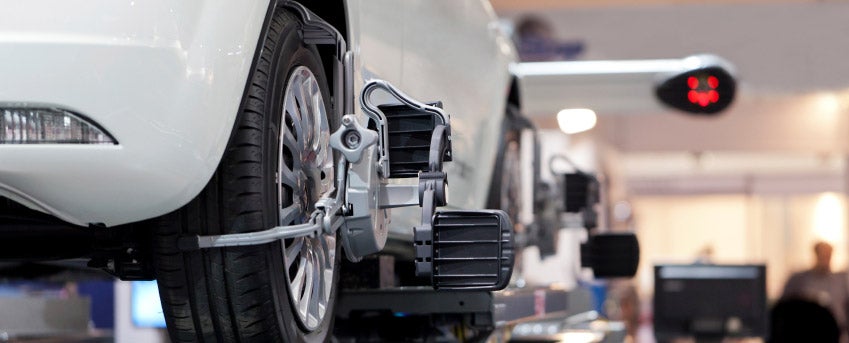
When your vehicle rolls off the production line, these items are in perfect alignment with each other using a computerized, laser-guided alignment machine. However, potholes, mileage, collisions, and many other issues can cause these parts on your vehicle to become out of alignment. While a vehicle with a less-than-perfect alignment typically promotes tire wear, worn tires rarely, if ever, cause your vehicle to become out of alignment.

Which Comes First: New Tires or Alignment?

The central question remains: Should you have your tires changed before or after a vehicle alignment? Naturally, a certain amount of debate surrounds this question. Some technicians may tell you that worn tires, especially those with significant alignment wear, can have an effect on the vehicle's alignment. Most experts suggest that the only effect worn tires are likely to have is a change to the vehicle's ride height which, given today's steering and suspension design, is unlikely to have an effect on the alignment. So, should you complete an alignment before you install new tires or should you wait until the new tires are on the vehicle?
Answers About Alignments

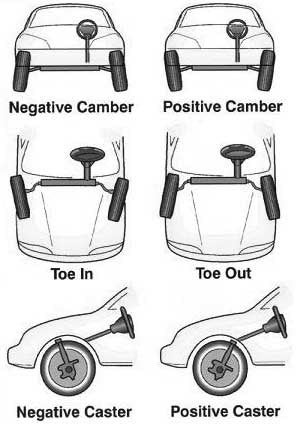
Up until the 1980s, most vehicles had three different angles that could be adjusted at the front end. These angles include the following:
  • Toe in and toe out, terms referring to whether the front of the tires point in or out, like pigeon toes or splayed feet
  • Camber, a term describing whether the top of the tire tilts toward the center of the vehicle or away from it
  • Caster, a term referring to an imaginary line that extends vertically from the ground up through the wheel's center

Each one of these angles plays an important role in how well your vehicle handles, but only camber and toe affect tire wear. With older vehicles from this period, drivers may have seen better results by replacing their tires before making an alignment, as excessive wear may have affected the camber measurement. However, most of today's cars feature a fixed front end where camber and caster levels become set at the factory and cannot be adjusted, leaving only the toe-in and toe-out levels for adjustments.
With such limited adjustments, whether your tires are older and show signs of wear should have limited, if any, effect on your vehicle's alignment. However, you can use the wear showing on the tires to help you decide whether you should take your vehicle to an auto technician to receive an alignment. Be sure to check your tires on a regular basis for correct tire pressure and for any visible signs of wear.

Other Factors Affecting Tire Wear and the Final Answer

While your vehicle's alignment can, and often does, play a major role in how well or poorly the tires wear, other factors can also cause similar issues. One of the most common issues concerns worn or damaged steering and suspension parts. These parts include all moving and stationary steering parts, shocks, struts, and springs. Before you invest in either a new set of tires or an alignment for your vehicle, you might be better off having a certified technician inspect your vehicle's steering and suspension for you.

Can You Get An Alignment Before New Tires?

Yes, you can get an alignment before buying new tires. It doesn’t matter whether you get your alignment before or after having your new tires put on. Most experts agree that the only effect worn tires have on your alignment is a change to the vehicle's ride height which, given today's steering and suspension design, should be negligible.
 
Posted in:

Related Posts

Franklin Auto Service Center

You Think a Dirty Engine Intake Air Filter Causes Lousy Fuel Economy, Not Quite

It used to be easy for a mechanic to explain to someone why keeping a car's engine intake air filter clean and fresh was necessary. They just had to mention that you're wasting money at the pump while putting the dirty filter in your face. That's old school, people who work on cars and trucks aren't called mechanics anymore, and technically the dirty filter/lousy fuel economy argument isn't as easy as all that with modern engines. The tech's here at Ford Lincoln of Franklin service know modern engines and why you need to keep your air filters clean. The answers they have may surprise you, and If you want to know how to call out an old school mechanic on the dirty air filter/low fuel economy argument, if that's how they're selling the job, read on. more A Brief Lesson in Internal Combustion Gasoline internal combustion engines have always utilized a mixture of fuel and air to create an explosive force in the engine cylinders creating mechanical movement. In days of yore, there were things called carburetors that inhaled air, sucked gas through a rubber hose, and shoved the whole mix into a cylinder to be compressed by a piston after which a spark ignited the whole thing to make a tidy, and powerful, little explosion. Long story short, this process went round and round to make the wheels on the car go round and round. Yesterday and today, it has always been the job of the engine intake air filter to make sure the air that gets into the engine is free of debris and dirt so only clean air mixes with the fuel. All foreign contaminants are captured in the air filter keeping the combustion chambers, and the internals of the engine, clean and free of debris. The rub is that as the filter cleans the air, it gets clogged up. With an old carburetor that meant that less air got to the combustion cylinder and your engine sucked more fuel to compensate. This affected both economy and performance. Enter Fuel Injection, The Computer Chip, and The Mass Air Flow Sensor To this day, as the engine intake air filter does its job, it gets clogged and as a consequence less air makes it to the combustion chamber. The difference in modern engines though, is that there's a sensor near the entry of the filter passage, called the mass air flow sensor that actually measures how much air the engine is taking in. If the sensor detects that there isn't as much air coming in as the engine design requires, this information is tabulated by a computer chip which then recalculates how much fuel the fuel injectors put into the cylinder for the aforementioned explosion. Less air flow sensed means less fuel dispensed. So economy doesn't suffer. Performance however, still takes a hit. Now, theoretically, your filter may be so clogged that no air flows, at which time your mass air flow sensor tells the chip that there is no air, thus, no fuel gets injected, and then, no explosion. Chances are though, this is more likely a sensor failure than a filter failure. None the less, it's possible. Overall Performance Effects of Dirty Air Filters Seeing as the amount of energy your engine produces is directly related to the amount of fuel in the cylinders during the power stroke (the explosion), less fuel would make for less power. As a result your engine performance suffers with a dirty air intake filter. Surprisingly, there's another oft neglected filter that can cause you more headache. The cabin air filter. The cabin intake filter filters the air coming into your vehicle's cabin before it is processed by the heating or cooling systems. Just like the engine intake filter, the cabin filter becomes clogged too. If this blockage becomes chronic your heating and cooling systems may seem to not be working well. Unfortunately, if you don't have the cabin air filter, about fifty bucks, checked first then you can be spending hundreds, even thousands of dollars on heating and cooling system maintenance and repair when all you need is a fresh cabin air filter. So be aware. There are two air filters you need to know about. Save Money, Time, and Hassle with the Qualified Service Center at Ford Lincoln of Franklin Everyone is interested in getting the best performance from their car, and one of the easiest ways to do that is getting routine maintenance from qualified technicians. At Ford Lincoln of Franklin we take great pride in helping our customers keep their cars and trucks on the road and running great. The service team here at the dealership uses state of the art technology with the latest and most up to date factory information making sure each and every scheduled maintenance and repair is up to speed. Our guys and gals are some of the best trained in the area and are always ready with courteous assistance. Come on by today, or give us a call at 888-433-0436 to schedule an appointment. Regularly scheduled maintenance at our dealership is a great way to get peace of mind when driving.

Summer Tires

6 Things to Know About Summer Tires

When you want to hit the road this summer, make sure your tires are up for the journey. Many drivers favor all-season tires throughout the year, but you can also invest in summer tires if you want improved performance during warm weather. You'll have to remove the tires before winter sets in, but while the temperatures are favorable, you might get more mileage out of your car. more Shallow Tread After a quick glance at a summer tire, you might mistakenly believe that the tire has been used and worn to a near-bald state. However, this is because summer tires feature extremely shallow tread. This means that you won't have much grip if you leave the tires on your car and attempt to drive in icy or snowy conditions, which is why you must have a set of winter or all-purpose tires put on as soon as the weather turns chilly. Shallow tread can also make driving in wet conditions more dangerous. The existing grooves will help shed water if you're driving during a storm, and hydroplaning won't become an issue unless the water level gets dangerously high. However, if you drive frequently in the rain, consider a different type of tire. More Surface Contact Manufacturers design summer tires to have as much physical contact with the road surface as possible. This can make you feel more connected to the road while you're angling through curves or cruising down the highway. Many drivers prefer this experience, especially when they embark upon summer road trips. It's particularly ideal for smooth, dry roads. Firmer Ride Quality Although summer tires have plenty of benefits, you might have to sacrifice some comfort. Because of the increased road connection and the low sidewalls, you'll feel all the bumps and divots in the road more keenly. This could mean a little stiffness and soreness after a long road trip, depending on your tolerance level. To maximize your experience with summer tires, invest in a newer Ford vehicle that has built-in comfort features, such as lumbar support. You'll feel better during and after your excursions in your car because the vehicle's features will counteract any discomfort caused by the tires. You can also buy aftermarket products, such as seat covers, to further maximize your comfort. Ideal for Performance Cars Although summer tires can work with just about any vehicle, they're made specifically for performance cars. The increased agility and control lends itself to high-performing vehicles, so they make a reasonable choice if you drive a Taurus, Mustang, or similar vehicle. You can also outfit your performance car with performance parts. Look for specials on car parts to snag a great deal while getting the most out of your vehicle. Make sure to follow the Ford-recommended service plan so your car remains in tip-top shape for your road adventures. Elevated Cost While summer cars can boost performance, they also come at a cost. You'll pay more for these tires than you would for the winter or all-weather variety, which means digging a little deeper into your finances. If you enjoy getting the best performance out of your vehicle and showing off your car's abilities on the road, the extra costs might be worth the benefits you gain from summer tires.

car maintenance

Top 5 Ford Maintenance Tips from Ford Lincoln of Franklin

Five Ways to Maintain a Vehicle from Ford Lincoln of Franklin Keeping your vehicle up and running is a big deal. And that's why the team at Ford Lincoln of Franklin has put together five of the best ways to get it done. Serving Franklin, Clarksville, Lebanon, and Nashville, Ford Lincoln of Franklin strives to be your one stop destination for any vehicle need. more Keep the oil fresh There's nothing nice you can do for your vehicle than to keep its oil fresh and clean. The mating surfaces of the engine work hard to get you and your family from point a to point b, and they do so in a very punishing environment. Heat, friction, and just general duty are putting constant strain on your engine's moving parts, and it's the oil that makes sure that these parts can keep standing up to the punishment. Fresh, clean oil that is replaced at least on the manufacturer's schedule is a must to keeping your vehicle running at tip top shape. Wash, wax, vacuum The easiest way to keep your car looking, feeling, and maybe even smelling good is to keep it washed, waxed, and vacuumed. On the exterior painted surfaces, if you keep grime and road debris at bay then there is a better chance that the surface will keep it's new luster longer. That's because letting the dirt and debris accumulate over time will cause minute scratches that will etch away at the coatings. Fresh washes and waxes prevent accumulation of this crud. On the interior the same applies. Use of a car means that what's outside gets tracked inside, and what gets tracked in is usually dirt and grime. Keeping the flooring and seats clean will keep the carpet and upholstery from getting ground in dirt and grunge. Seasonal checklist Every season is going to bring different needs to you, your family, and how your vehicle fits into these needs. So every time the seasons change, you should evaluate what types of things you'll need to keep handy as well as what things you should make sure you have tended to. Things to keep in mind are the weight of the windshield wipers which vary with the weather of the season, antifreeze potency when fall turns cold, air conditioning charge when spring turns to summer, and maybe even the tires you run. It's a blend that more than likely will be custom to you, but regardless, you should have some seasonal change items that make sure your vehicle is ready for the weather. Keep up to date on recalls Manufacturers are always looking into their vehicles to be sure that what's on the road is going to meet the driving needs of their customers. Also, they check for ongoing issues that may relate to safety. So when you get a recall notice in the mail, you should make sure to schedule an appointment to have the dealership's service department handle it. Most recalls are easy fixes and take only a little bit of your time, and they won't cost you a cent. The dealer will perform whatever action is required to correct the deficiency and get your vehicle back to you quickly. Use authorized parts When you do repairs or replacements on your vehicle, whether you do the work yourself or have a shop do the work, make sure you use reputable replacement parts. Keeping your components in specification with the manufacturer's requirements will make sure that the repairs and replacements that you do will last long, and perform to the manufacturers specs. Call Ford Lincoln of Franklin for your next service When it comes time for service, make sure to contact the team at Ford Lincoln of Franklin. Serving the Franklin, Lebanon, Clarksville, and Nashville area, we are ready to make your next service visit a complete success.

 |   | Model Showroom