Blog / Ford News

All New F-150 Raptor gets HP boost

Ford F-150 Raptors
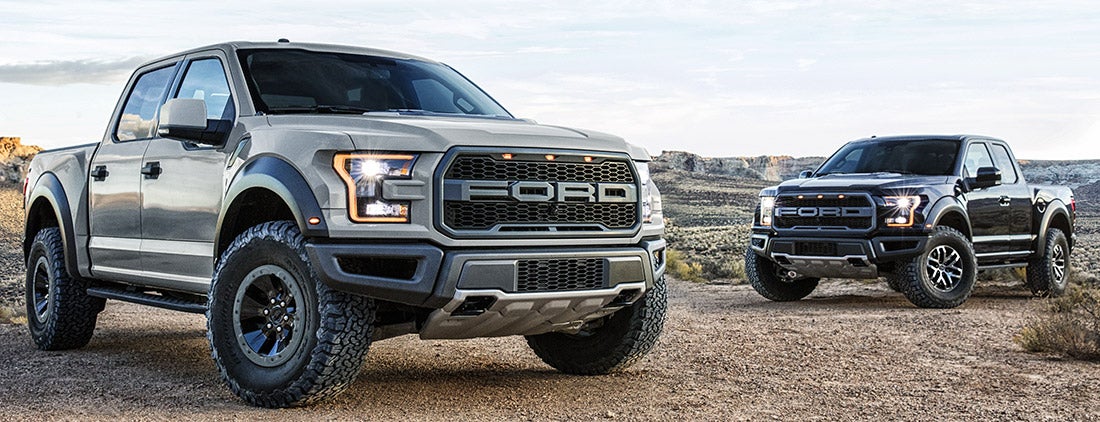
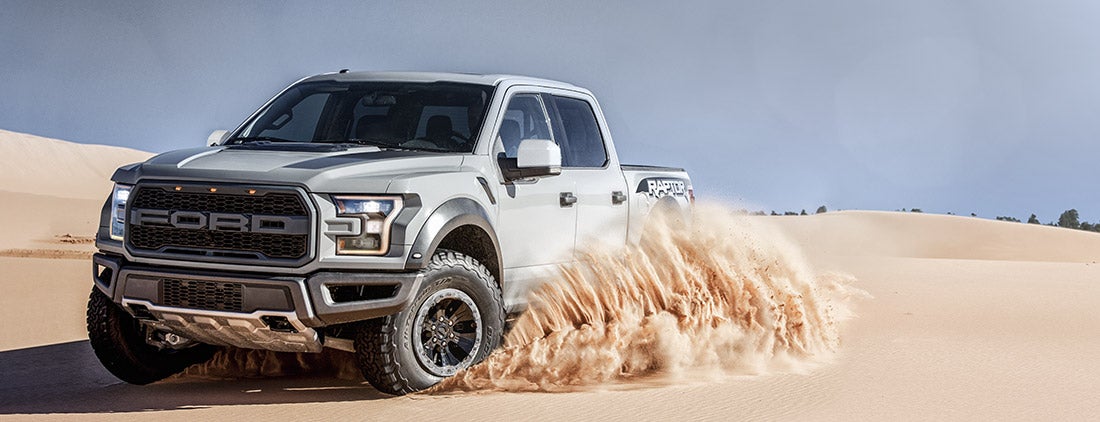
The 2017 Ford F-150 is shaping up to be a 10. The updated pickup will be the first Ford to feature a new 10-speed automatic transmission that was jointly developed with GM, and it’s been confirmed that the Raptor will have a new 3.5-liter twin-turbocharged EcoBoost V6 that’s rated at 375 hp, 10 hp more than the current motor and 470 lb-ft of torque, which is a boost of 50 lb-ft. The 2017 F-150 Raptor will feature a high performance version of the 3.5-liter that Ford says will outgun the old Raptor’s 6.2-liter V8, which was rated at 411 hp and 434 lb-ft, but hasn’t yet revealed by how much. While the horsepower rating trails the F-150’s 5.0-liter V8 and its competitors top eight-cylinder engines, the torque number beats the Chevrolet Silverado’s 6.2-liter V8 for best in class honors by 10 lb-ft. Ford Raptor Off-Roading Similarly, its horsepower rating beats out rivals like the Ram 1500 Rebel, which delivers 395 hp in its most powerful form. Ford says the new Raptor delivers more low-rpm torque than before and better optimized shift points with its new 10-speed automatic transmission and torque-on-demand transfer case. “Looking at the torque curve of the Raptor’s EcoBoost engine, you see the twin turbos spool quicker for faster time to torque, it hammers quick and keeps delivering torque for a more brawny feel than its V8 predecessor,” said Al Cockerill, Raptor’s powertrain development engineer, in a recent release. Using the same military-grade aluminum-alloy body and fully boxed high-strength steel frame as the current F-150 trucks, the 2017 Raptor is up to 500 lb. lighter than the 2014 model. It delivers 21 percent improved average torque-to-weight ratio and a 23 percent improvement in EPA-estimated combined fuel economy compared with the previous generation Raptor. EPA estimated fuel economy ratings for the 2017 F-150 Raptor are 15 mpg city, 18 mpg highway and 16 mpg combined. “Raptor was designed to be a no-compromise, off-road performance machine. That is why we made the switch from the cast-iron V8 to the aluminum block, high-output GTDI V6 EcoBoost engine that our team tuned to add for today’s Raptor,” said Matt Tranter, Ford Performance engineering supervisor. “The torque-on-demand transfer case and six-mode Terrain Management System is unique to Raptor in the Ford family of vehicles. It gives you the benefit of a clutched all-wheel-drive system for easy around-town maneuverability in bad weather. Then, there’s Baja Mode, which automatically engages a mechanically locked 4X4 high, and optimizes throttle response, shifting and boost control to provide improved off-road capability.” Ford Raptor in the Desert Ford has sold over one million of its 3.5 and 2.7 liter EcoBoosts since it first started, offering turbocharged engines the F-150 in 2011, and they now account for a majority of the model’s sales.
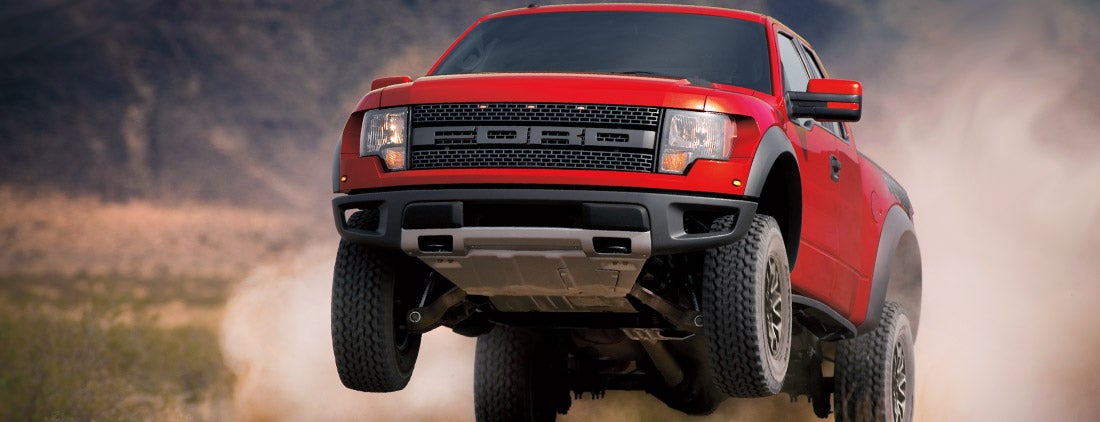
  • High-output EcoBoost features for Raptor include more-aggressive turbo compressors with increased boost calibrations, cast stainless steel manifolds and full dual exhaust, oil-cooled pistons and more-aggressive engine control calibrations
  • Standard 10-speed automatic transmission, the first from Ford not to employ cast-iron components, features Auto Start-Stop and an integrated electric pump to improve driving efficiency
  • Raptor’s new adaptive shift algorithms monitor a dozen powertrain and driver control signals, ensuring the right gear at the right time in Raptor’s normal, sport, weather, mud/sand, rock/crawl and Baja modes
Although it hasn’t formally listed pricing on its website, Ford confirms that the F-150 Raptor will start at a base price of under $50,000. But this summer, Ford documents revealed a price of $49,520, including a destination charge of $1,195. The 2017 Ford F-150 Raptor is now available to order from Ford Lincoln of Franklin.

Posted in:

Related Posts

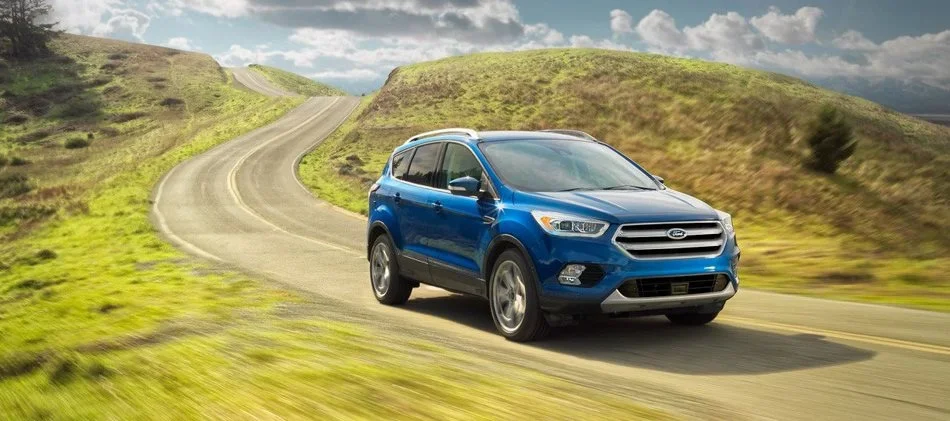
2018 Ford Escape

Tips for Comparing the Ford SUVs

The Ford family of SUVs have a number of similarities to them: they're all safe, they're all great for families, and they're all styled to appeal to the driver, the passengers, and the people on the street. But it's the differences between them that will help you settle on a final decision for you, your family, or your business. If you're currently having a hard time knowing where to even start, keep these tips in mind to choose between the Expedition, the Escape, the Flex, the Edge, the Ecosport or the Explorer. more The Biggest If you're looking for lots of space plus extreme towing capacity, then the Expedition is the SUV for you. This SUV features the ability to tow 9,200 pounds, which should be enough for even the busiest of haulers. There's also plenty of interior space for you, the family, and practically everything you'd want to take with you in the vehicle. The Most Environmentally Friendly Unsurprisingly, you're looking at the Ecosport, which will be available in early 2018. This vehicle may look small, but it has a surprising amount of room inside. The driver will see about 52 miles to the gallon, which should give wallets everywhere a bit of a break. It's smaller frame and sleek styling means it's incredibly nimble when on the road, allowing you to effortlessly zip and flit through lanes. The Most Versatile The Explorer is known for allowing its drivers to seamlessly go from the deepest backwoods to the grocery store parking lot without a lot of fuss. This SUV has a Terrain Management System, so your wheels (and engine) aren't getting a work-out unless they're about to kick up some serious dust. The Classiest If you're looking for something a little more sporty, then it's time to test drive the Ford Edge. Known for its style and sport, the cabin has a sophisticated design that doesn't skimp on the details. Luxury and technology meet in the middle to give the driver convenience, entertainment, and fun. Features a 2.7L EcoBoost® V6 engine on all sport models. The Most Practical The Ford Flex is excellent for people who have their eye on the Expedition for its towing capacity, but may not need as large. The Flex can still haul 4,500 pounds, and features plenty of interior room to spare. This car has all-wheel drive, and advanced stability control to keep all four wheels on the ground in even the most harrowing of situations. The Most Convenient The Ford Escape has a lot to offer in the way of busy families trying to get around even busier cities. The entertainment features inside are extremely user friendly, as are the safety features to keep everyone in one piece. Both hands full of groceries? Just use your foot to swipe under the trunk to get it to pop open. Turbocharged engine makes it simple to get around on even the steeper grade hills. Once you know the features you're looking for, choosing between the SUVs should be a snap!

Ford Turning Captured CO2 into Auto Parts for its Vehicles

From envisioning and developing one of the first automobile production lines, to being the first producer of flathead V8 engines, the Ford Motor Company has long been at the forefront of automotive innovation. Now, Ford can claim another first. The company has announced a project aimed at producing auto parts made from captured greenhouse gases. more Ford has been pushing the boundaries of sustainability, and this is just another example of the company's commitment to using renewable, biomaterials on the production line. Using the captured carbon dioxide, Ford is experimenting with the production of foams and plastics used in seats, cabin materials and even engine components, and they're the first automotive manufacturer to test this unique approach. The initiative, if it makes it to the production line, has the potential to help Ford reduce its petroleum use by nearly 600 million pounds each year, which is enough petroleum to fill 35,000 houses, Ford says. Ford's Long Commitment to Sustainable Materials The Ford Motor Company's founder Henry Ford was a champion of automotive innovation. For example, in the 1940s, Ford started experimenting with agriculture-based materials, which lead to Ford developing a soybean-based vehicle built in 1941. Plus, Ford's Dearborn, Michigan plant was one of the first in the world to produce fenders made of soybeans. That history continues today. In recent years, Ford has been moving away from plastic and artificially produced materials. The main reason is cost. Plastics require a large amount of oil to produce, while products like soybean-based and carbon dioxide-produced biomaterials greatly reduce the petroleum footprint and ultimately cost. Yet, in the last two decades, Ford's biomaterials research and production has truly taken off. Ford is leading the way in design and development of materials made from recycled or sustainable products. For example, the majority of Ford vehicles feature cushions, seatbacks, and headrests which are produced with soy-based materials. Additionally, the coin cups in many Ford cars are made with recycled shredded paper money. In 2016, Ford is also using coconut fibers in their truck liners, and recycled plastic bottles have been used to create fabrics for the 2016 F-150. The move to research and develop CO2-based plastics for their vehicles is just the latest step in Ford's mission to create vehicles produced with sustainable materials. How CO2 Is Used to Produce Vehicle Parts To help jumpstart the CO2 research initiative, Ford partnered in 2013 with Novomer, a company that captures carbon dioxide produced in the manufacturing industry. The partnership will provide Ford's research lab with an abundance of captured carbon dioxide to experiment with and refine their production of foams and plastics made from the world's most abundant greenhouse gas. The project is still in its early stages, but the results have been promising. Ford's research lab has developed a process for transforming captured carbon dioxide into a dense, soft foam material, which could be used for cushions and seating, and they're also experimenting with durable plastics for fabric and engine components. Yet, there's still experiments and research that needs to be conducted. Although Ford says that carbon dioxide-based materials won't likely be used on the production line for five years, it's still an exciting announcement and signals the future of automotive design sustainability. At Ford Lincoln of Franklin, we're excited about the news. Many of our customers are already interested in the sustainable features of our vehicles – from Ford's fuel efficiency ratings, to their electric vehicles. If you're interested in the sustainable features of the 2016 Ford line-up, just ask the sales team at our Franklin, TN dealership when you come for a visit.

2018 Ford F-150

Get Ready For the New 2018 Ford F-150

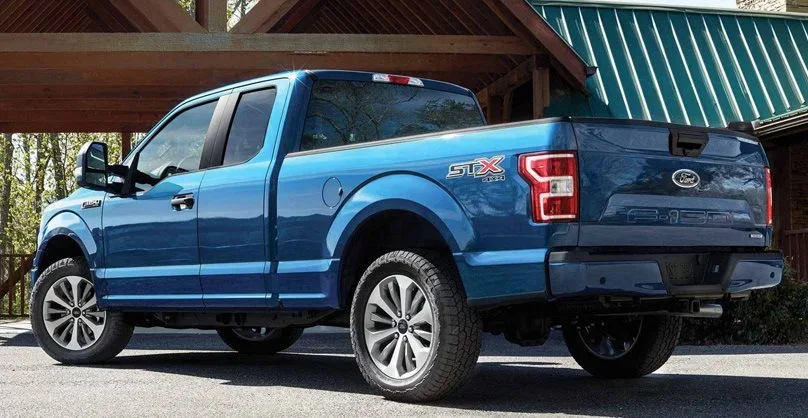
The new 2018 version of the Ford F-150 has some exciting changes that will make it better then ever. Some of the major changes include an entirely new engine to the model, added torque and horsepower, and more gears in the transmissions. When the new model year is released this fall, there is a lot to be excited about. more The New Engine Options There will now be five new engine options for the F-150. The five engines available will be: A 3.3 liter V6 that is naturally aspirated A newly modified 2.7 liter EcoBoost V6 A newly modified 5.0 liter V8 The 3.5 liter EcoBoost previously offered The 3.5 liter high-output EcoBoost V6 The last four options are either the same versions available on the 2017 model or ones that have been reworked to perform even better. The engine option that is entirely new is the 3.3 liter V6. It is also a remodified version of an engine that is currently the base option, the 3.5 liter V6. This new version comes with port and direct injection that allows it to work better with lower speeds and loads as well as high engine outputs. It utilizes a dual-injection system that also has intake runners that have been modified for the new engine. As far as power, it is impressive. It offer 290 horsepower at 6,500 reps per minute which is more than the 3.5 liter offered now that only allows 282 horsepower at 6,250 reps per minute. The torque also can go higher and lower than before with 265 lb-ft at 4,000 reps per minute. The current engine only has 253 lb-ft at 4,250 reps per minute. The six speed transmission will come standard with this engine. What is Different With the Other Engines? Two of the other engine options were also modified for the new model year. The 2.7 liter EcoBoost now offers dual port and direct-injection. With this new configuration, the torque is increased to 375 lb-ft. It also allows the torque to kick in sooner like the 3.3 liter engine. It comes it at 2,750 reps per minute compared to to 3,000 of the current model. The horsepower is not changing and is 325 at 5,750 reps per minute. For the 5.0 liter engine, it will also get the duel-injector. In addition to that, it will have a spray-on bore liner that helps take some of the weight off of the truck. The horsepower increased by 10 to 395 at 5,750 reps per minute. The torque increased as well at is at 400 lb-ft at 3,850 reps per minute. The new 10-speed transmission will be standard with all four of the other engine options. All five engines will come standard with the Auto Stop Start technology. With these engine changes, it is still not clear how it will impact fuel economy but that news should come soon before the release of the model year. If you are interested in learning more or taking the new model year for a test drive once released, be sure to stop by our showroom.

 |   | Model Showroom